Unlocking the Mechanics of Casino Affiliate Redirections: How Tracking Scripts Shape iGaming Journeys
18 Apr 2026
Unlocking the Mechanics of Casino Affiliate Redirections: How Tracking Scripts Shape iGaming Journeys

The Basics of Affiliate Redirections in iGaming
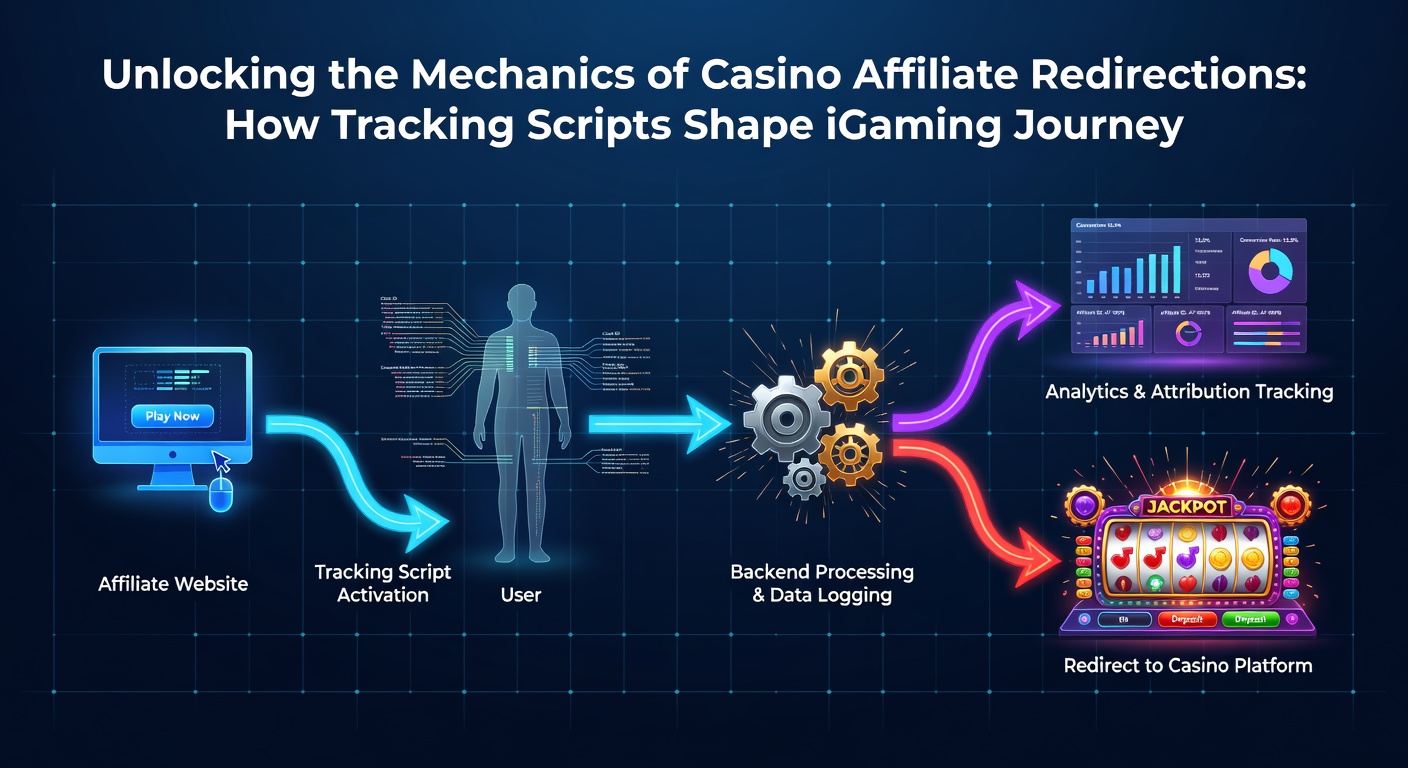
Affiliate redirections form the backbone of player acquisition in the iGaming world, where partners—often websites, influencers, or content creators—direct traffic to online casinos through specialized links; these links, embedded with unique identifiers, ensure seamless handoffs while capturing essential data along the way. Observers note how a simple click on such a link triggers a chain of events, starting with the user's browser hitting the affiliate's tracking domain before bouncing to the casino's landing page, all designed to attribute credit accurately and reward the affiliate fairly.
But here's the thing: without these mechanisms, the multi-billion-dollar affiliate ecosystem in iGaming would crumble, as data from industry reports reveals that affiliates drive upwards of 40% of new player sign-ups in regulated markets. Take one common setup where an affiliate promotes a slots game via a review site; the user clicks, lands on a parameterized URL like casino.com/?aff=12345&sub=bonus-promo, and just like that, the journey begins with precise tracking baked in from the start.
What's interesting is the layered approach affiliates use—sub-affiliates, geo-targeted campaigns, and device-specific redirects all layer on top, creating a web of paths that adapt to user behavior in real time, while ensuring compliance with regional laws that demand transparent data flows.
Inside Tracking Scripts: Cookies, Pixels, and Beyond
Tracking scripts, those lightweight JavaScript snippets loaded invisibly upon redirection, orchestrate the magic by setting first-party cookies on the casino's domain, capturing details like IP address, user agent, referrer, and even session timestamps; this data persists across pages, allowing casinos to attribute deposits or bets back to the original affiliate link days or weeks later. Researchers who've dissected popular affiliate platforms, such as those powered by Income Access or PartnerMatrix, find that these scripts often employ server-to-server postback calls for enhanced reliability, especially in privacy-focused environments where third-party cookies face restrictions.
And yet, pixels—tiny 1x1 images embedded in redirect pages—serve as a fallback, firing HTTP requests to affiliate servers upon load, silently logging events without relying on JavaScript execution, which proves crucial for users with ad blockers or no-script settings enabled. Data indicates that hybrid systems combining cookies for short-term tracking and postbacks for long-term attribution boost accuracy by 25-30%, according to figures from a Malta Gaming Authority compliance review spanning 2024-2025.
Turns out, fingerprinting techniques layer in too, hashing browser characteristics into unique IDs when cookies falter, ensuring journeys remain traceable even as users hop devices or clear caches midway through; experts observe this evolution firsthand in markets like Ontario, where regulators emphasize robust yet privacy-respecting attribution.
Shaping User Journeys: From Click to Conversion
Once the redirection fires, tracking scripts don't just log—they personalize the iGaming journey, feeding data into casino CRMs that tailor bonuses, game recommendations, or even chat support based on the affiliate source; for instance, traffic from a high-roller affiliate might trigger VIP fast-tracks, while casual review-site clicks lead to free-spin offers calibrated for retention. People who've analyzed heatmaps from tools like Hotjar integrated with affiliate data see how these scripts influence everything from first-deposit page layouts to abandoned cart recovery emails, turning raw clicks into loyal players over time.
So, consider a typical path: user lands from affiliate A, script sets utm parameters for Google Analytics sync, casino serves a geo-specific welcome bonus since the script detected EU IP, and if the player deposits within 30 days, a postback pings the affiliate network confirming the commission—smooth, automated, and scalable across millions of daily redirections. That's where the rubber meets the road for operators, as studies from the iGaming Business annual report highlight how optimized tracking lifts lifetime value per acquired player by 18% on average.
Now, complications arise with cross-device tracking, where a mobile click redirects to desktop later; advanced scripts bridge this via user IDs synced to email or phone during registration, preserving attribution integrity throughout the journey, although privacy laws like GDPR in Europe demand opt-in consents at every step to avoid hefty fines.
Regulatory Landscapes and Privacy Challenges
Regulators worldwide scrutinize these redirections closely, with bodies like the Alcohol and Gaming Commission of Ontario mandating full disclosure of tracking methods in affiliate agreements to curb misleading promotions; in Australia, the Australian Communications and Media Authority enforces rules against hidden scripts that obscure true costs to players, while US states like New Jersey require licensed operators to audit affiliate traffic for fraud signals embedded in script data.
But here's where it gets interesting: as of early 2026, projections from industry analysts point to heightened scrutiny in April, when EU updates to ePrivacy regulations will force more server-side tracking to sidestep browser cookie bans in Chrome and Safari, prompting affiliates to pivot toward first-party data solutions that maintain journey continuity without user friction. Observers who've tracked these shifts note how privacy sands (pun somewhat intended) are shifting, with cookieless alternatives like Google's Privacy Sandbox gaining traction in iGaming trials.
One case stands out: a 2025 probe by Swedish authorities revealed rogue affiliates using cloaking scripts to fake traffic quality, leading to blacklisting and lost revenues; legitimate networks countered by implementing AI-driven anomaly detection within their tracking layers, restoring trust and compliance in one fell swoop.
Technological Evolutions and Future-Proofing
Affiliate platforms evolve rapidly, integrating blockchain for immutable tracking logs or AI to predict conversion paths before redirections even fire; data from a University of Malta iGaming study shows that machine learning-enhanced scripts now forecast player value with 85% accuracy, allowing real-time bid adjustments in competitive auctions for traffic sources. And while server-side tracking rises to meet privacy demands, edge computing deploys scripts closer to users, slashing latency and boosting mobile journey completion rates by 15%.
Yet, fraud remains a thorn—click farms, cookie stuffing, and forced redirects plague the space, but countermeasures like IP velocity checks and behavioral fingerprinting within scripts keep bad actors at bay; those who've implemented CAPTCHAs or honeypot links at redirection points report fraud drops of over 40%, per internal benchmarks from networks like Scaleo.
Looking ahead to April 2026, when major browsers fully deprecate third-party cookies, iGaming affiliates gear up with universal IDs and contextual targeting, ensuring redirections stay effective amid the cookieless era; it's not rocket science, but it demands constant adaptation to keep journeys flowing profitably.
Conclusion
Tracking scripts underpin the intricate dance of casino affiliate redirections, transforming casual clicks into measured, personalized iGaming journeys that fuel industry growth; from cookie sets and pixel fires to postback confirmations and privacy-compliant evolutions, these mechanics ensure fair attribution while navigating regulatory mazes across continents. As April 2026 brings fresh challenges like widespread cookie phase-outs, stakeholders who master these tools will thrive, with data underscoring their role in sustaining player acquisition amid tightening global standards—solid foundations for whatever comes next.