18 Jun 2026
The Ripple Effects of Redirect Latency on Regional Casino Promotions Across Affiliate Networks
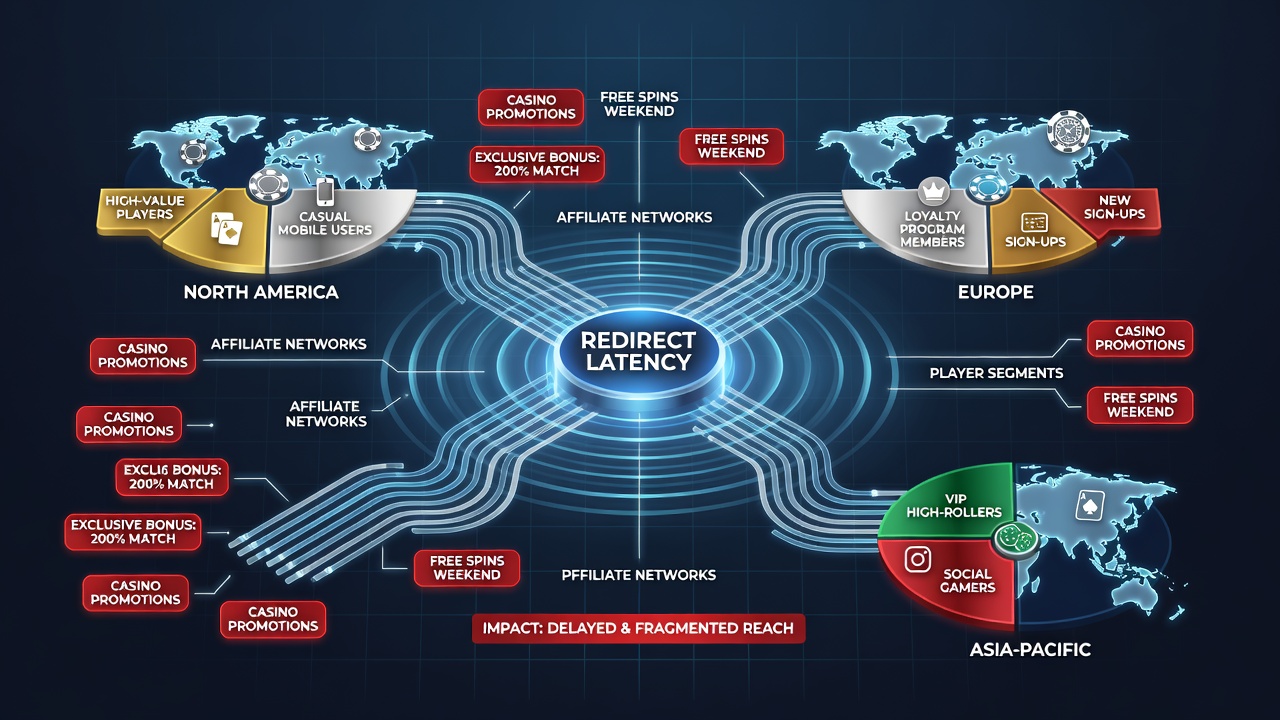
Redirect latency in affiliate networks creates measurable delays between a player's click on a promotional link and the final arrival at a casino site, and these delays alter how regional promotions distribute across player segments. Affiliate systems rely on tracking scripts that route users through multiple servers for compliance checks, geo-verification, and conversion logging, which means even small increases in processing time can shift which promotions reach specific audiences first.
How Latency Shapes Promotion Delivery
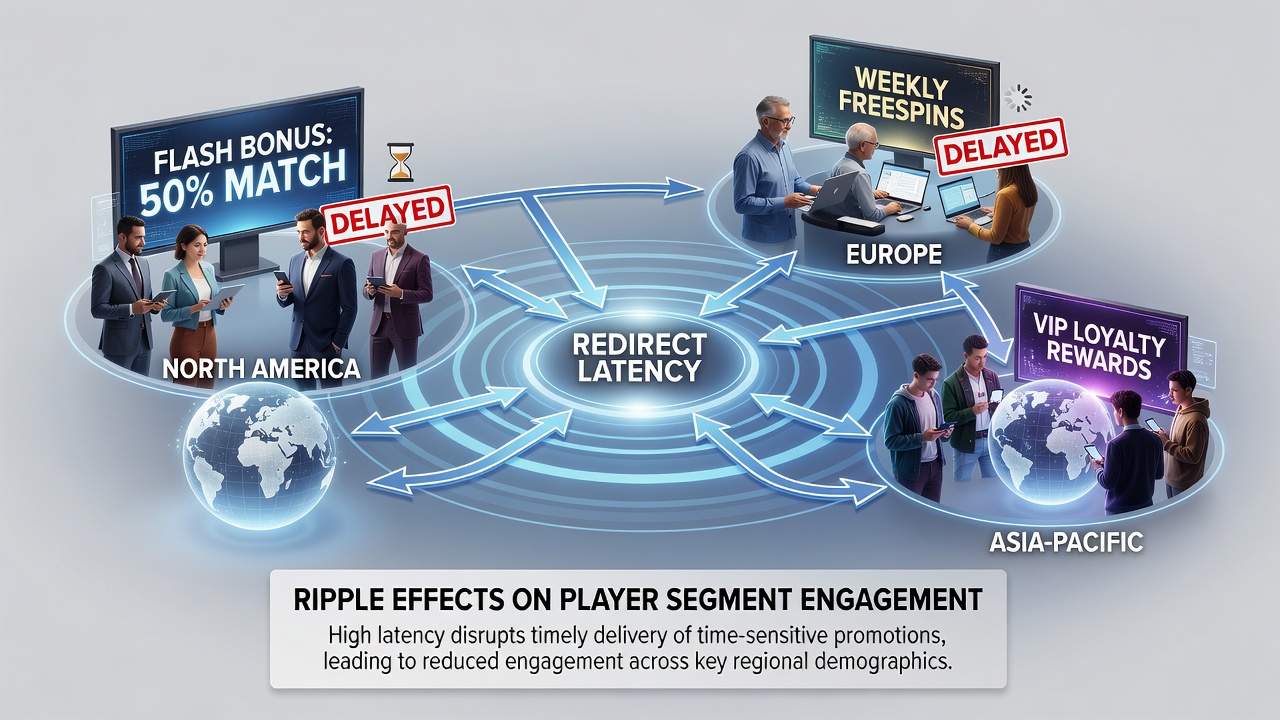
Regional casino promotions often target players based on location data collected during the redirect sequence, yet latency disrupts the timing of these targeted offers. Players in areas with stronger network infrastructure typically complete redirects faster, which allows them to access time-sensitive bonuses before slower connections finish processing. Data from network monitoring tools shows that average redirect times range from 800 milliseconds in well-connected urban zones to over 2.5 seconds in rural or cross-border regions, creating uneven exposure windows for promotions.
Those who manage affiliate campaigns note that scripts designed to detect device type and connection speed sometimes trigger fallback routes when delays exceed thresholds, and these alternate paths frequently serve different promotional content. A player using mobile data in one region might receive a deposit match offer while another on the same network but with higher latency sees only a free spin package, because the system adjusts based on completion speed rather than user preference alone.
Player Segments and Differential Reach
High-value players segmented by deposit history and engagement frequency experience distinct effects from redirect delays compared with casual users. Systems prioritize faster paths for accounts flagged as repeat depositors, which reduces their exposure to latency-related content shifts, whereas new or low-activity players encounter more variability. Industry figures reveal that segments with consistent engagement patterns maintain 15 to 20 percent higher completion rates on promotional redirects even when baseline latency remains constant across regions.
Geographic segmentation adds another layer because regulations in different jurisdictions require additional verification steps during the redirect. Players in markets with stricter compliance layers face compounded delays when scripts must query local databases before serving bonuses, and this process affects mobile users more than desktop users due to variable signal strength. Observers tracking affiliate performance in June 2026 reported noticeable drops in conversion for promotions aimed at emerging markets where both regulatory checks and network conditions extend redirect times.
Network Infrastructure and Regional Patterns
Affiliate networks operate through interconnected nodes that handle traffic from multiple operators, and congestion at any single node amplifies latency for entire player cohorts. Regions relying on shared international gateways see promotions arrive in staggered waves rather than simultaneously, which means early clickers secure offers that later arrivals never encounter. Research conducted by academic groups studying digital distribution pathways indicates that these staggered patterns concentrate certain bonus types among players with lower latency profiles, leaving higher-latency segments with narrower selections.
What's interesting is how device-level factors interact with these network realities. Smartphones on 4G or 5G connections often complete redirects quicker than older hardware on legacy networks, yet the same device in a different region may route through slower affiliate servers due to peering agreements between telecom providers. This combination produces promotion reach that varies not only by country but also by carrier and hardware generation within the same country.
Tracking Script Adjustments and Content Variation
Tracking scripts embedded in affiliate links collect timing data during each redirect, and operators use this information to refine which promotions appear for specific segments. When latency exceeds expected ranges, scripts may substitute static offers for dynamic ones that require real-time server calls, which reduces the personalization of regional campaigns. Reports from the International Association of Gaming Regulators document how such substitutions occur more frequently in cross-border scenarios where additional hops between affiliate servers and casino platforms add milliseconds to every request.
Player segments defined by behavioral analytics show different tolerance levels for these delays. Frequent visitors who navigate promotions regularly tend to abandon slower redirects at higher rates than occasional players, because their expectations around speed have been shaped by prior experiences. This behavioral split means regional promotions aimed at retention rather than acquisition suffer greater distortion when latency spikes, since the intended audience exits before the offer loads.
Observed Outcomes in Affiliate Ecosystems
Figures collected across multiple networks demonstrate that a 500-millisecond increase in average redirect time correlates with a 7 to 12 percent reduction in successful promotion deliveries for certain segments. The effect compounds in regions where affiliate partners share server infrastructure, because delays at one point cascade through the entire chain. Operators responding to these patterns have adjusted their script logic to prioritize essential compliance checks while deferring non-critical data collection, which shortens some paths without compromising regulatory requirements.
One study from the University of Malta's gaming research division examined how latency influenced bonus visibility during a multi-operator campaign and found that segments in lower-bandwidth areas received 18 percent fewer location-specific offers than their higher-bandwidth counterparts over the same period. These differences emerged purely from timing variations rather than deliberate content decisions, highlighting how technical infrastructure influences promotional equity across player groups.
Conclusion
Redirect latency continues to influence the distribution of regional casino promotions through affiliate networks by altering completion rates, content substitution patterns, and segment-specific exposure. As tracking systems evolve and networks expand their geographic coverage, the timing mechanics of these redirects remain a central factor in determining which player segments encounter which offers. Data collected through June 2026 and beyond will likely clarify whether infrastructure improvements or script optimizations can reduce these disparities across regions and device types.