8 Aug 2026
How Loyalty Tier Structures Shape Casino Visibility in Affiliate-Driven Discovery Tools
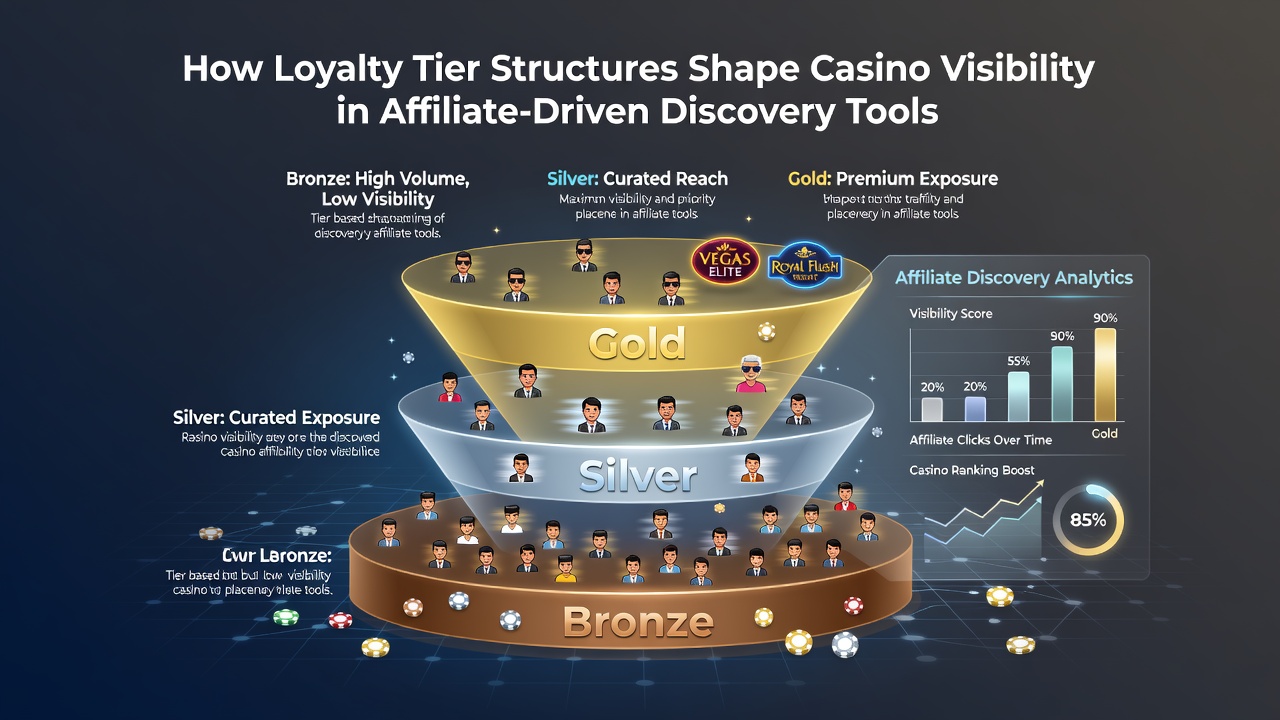
Loyalty tier structures in online casinos create layered player classifications that range from entry-level access to premium rewards, and these classifications feed directly into the algorithms that power affiliate discovery platforms. Affiliates track player retention signals, deposit frequency, and engagement depth, all of which correlate with tier advancement, to determine which operators appear higher in curated lists and recommendation engines. Data from multiple markets shows that casinos maintaining active gold and platinum tiers often receive elevated placement because their internal metrics demonstrate sustained user activity rather than one-time visits.
Mechanics of Tier Progression and Data Capture
Operators assign points based on wagering volume, time spent on site, and cross-game participation, then translate those points into visible status levels that unlock cashback, event invitations, and personalized support. Affiliate tools scrape or receive anonymized feeds from these systems, allowing them to weight visibility scores according to how quickly players move through tiers. When a platform reports that 35 percent of its active users reach silver status within 60 days, the affiliate algorithm treats that retention curve as a positive signal and surfaces the casino more frequently in search results for similar player profiles.
Regional regulatory filings confirm that operators in regulated markets must document these tier mechanics in player protection reports. In August 2026, several North American platforms updated their public filings to include tier velocity statistics, giving affiliates additional data points to refine their ranking models. Those updates revealed that casinos with transparent tier rules attracted higher click-through rates from discovery tools because users could predict reward timelines and therefore stayed longer.
Affiliate Algorithms and Tier-Based Weighting
Affiliate discovery tools operate on weighted scoring models that combine traffic quality, conversion rates, and lifetime value estimates. Loyalty tiers contribute to the lifetime value component because higher-tier players generate more consistent revenue streams. When an affiliate platform detects that a casino’s platinum tier members account for 28 percent of total handle, it assigns a visibility multiplier that pushes that operator ahead of competitors with flatter player distributions. Observers note that this multiplier effect becomes especially pronounced during seasonal campaigns when affiliates refresh their top-ten lists.
Take one affiliate network that restructured its ranking criteria in early 2025. After incorporating tier progression speed as a primary variable, the network recorded a 19 percent shift in operator positions within its discovery interface. Casinos that accelerated players into mid-tier status gained prominence, while those relying on entry-level bonuses dropped in relative ranking. The change occurred because the algorithm interpreted faster tier movement as evidence of stronger product-market fit.
Visibility Patterns Across Different Markets
European operators frequently publish tier distribution tables in compliance with local transparency rules, supplying affiliates with granular datasets. North American markets, by contrast, release aggregate figures through state gaming boards, which affiliates then cross-reference with their own tracking pixels. This difference in data granularity produces distinct visibility patterns: European-facing tools emphasize tier diversity, whereas U.S.-focused tools prioritize absolute numbers of players reaching top tiers.
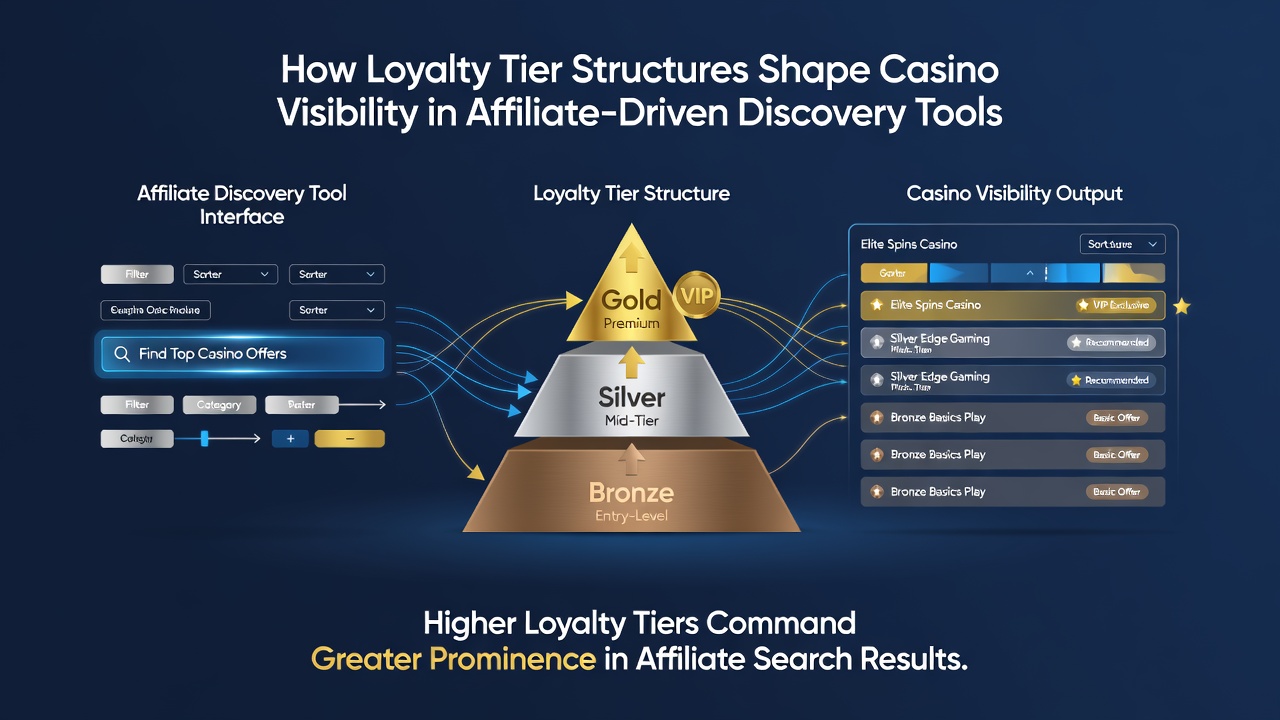
Industry reports from the European Gaming and Betting Association indicate that tiered reward structures correlate with higher average session lengths across multiple jurisdictions. European Gaming and Betting Association research links these structures to measurable increases in repeat visits, which in turn improve an operator’s algorithmic score within affiliate ecosystems. Meanwhile, data compiled by the American Gaming Association shows parallel trends in state-licensed markets, where tier completion rates influence which brands receive featured placement on aggregator sites.
Impact on Regional Promotion Strategies
Casinos adjust bonus structures and communication cadence according to tier level, and affiliates mirror those adjustments in their promotional calendars. A casino that offers tier-exclusive tournaments receives higher recommendation frequency during those events because click data spikes and conversion metrics improve. Affiliates therefore schedule visibility boosts to coincide with tier-related campaigns, creating a feedback loop where successful promotions generate more data that further elevates the casino’s standing.
Cross-border platforms face additional complexity when loyalty rules differ by jurisdiction. One operator operating in both Canadian and Australian markets maintains separate tier ladders to comply with local rules, yet its affiliate partners merge the datasets into a unified visibility score. The merged score rewards operators that demonstrate consistent tier advancement across regions, even when the underlying rules vary.
Conclusion
Loyalty tier structures supply affiliate discovery tools with quantifiable signals of player engagement and retention. These signals translate into algorithmic weighting that determines how prominently a casino appears in curated rankings and search results. As more markets release tier-related statistics and as affiliate models continue to refine their variables, the relationship between tier performance and visibility remains a central factor in how operators compete for attention within discovery ecosystems.