30 Jun 2026
How API Response Variations Alter Bonus Redemption Sequences Across Multi-Operator Gambling Networks
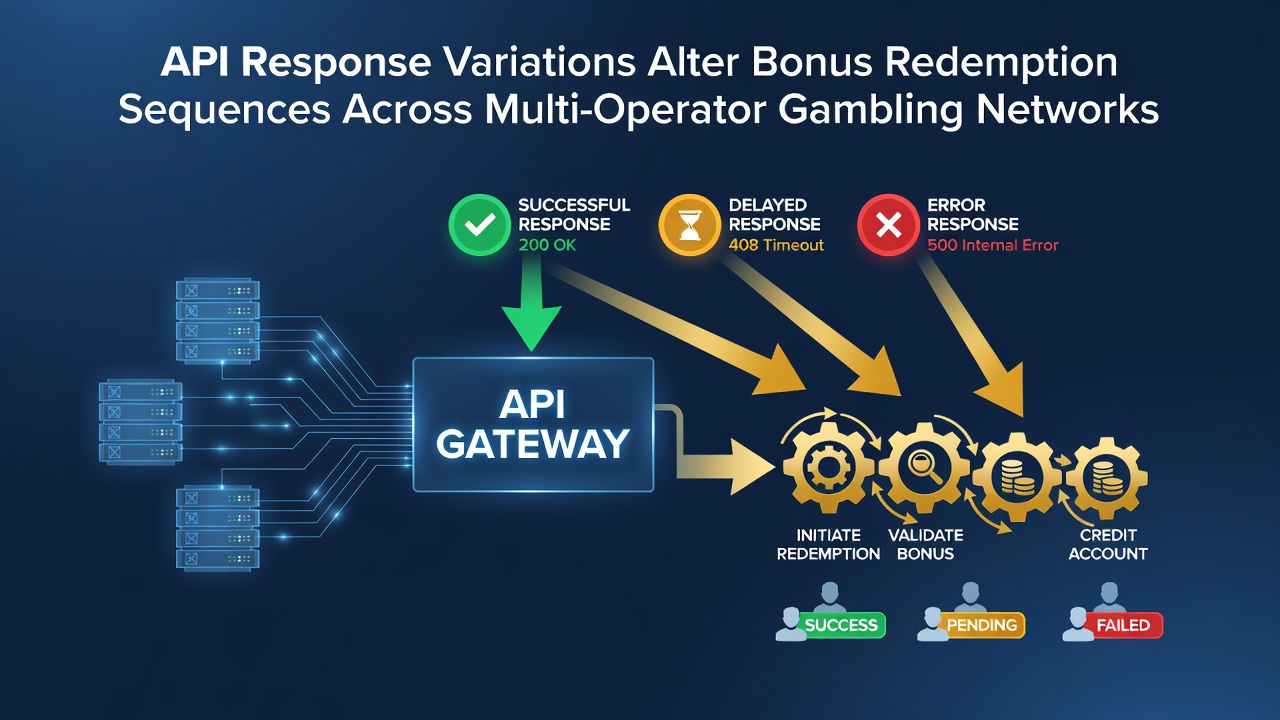
Multi-operator gambling networks rely on interconnected APIs to handle bonus redemptions, and variations in response times, formats, and error codes directly influence the sequence of steps that complete or interrupt those processes. Observers note that when one operator's system returns a 200 status with full eligibility data while another delivers a partial payload after a delay, the redemption sequence branches into different paths that affect player access and transaction logging across the shared platform.
Those who manage these networks report that API calls for bonus validation typically follow a standard order: an initial eligibility check, followed by a redemption request, then a confirmation callback. Yet response variations disrupt this order because latency spikes on one endpoint force the system to retry or switch to a fallback operator, which alters the entire sequence and creates divergent audit trails. Data from industry reports indicates that such shifts occur most often during peak traffic periods when multiple operators process simultaneous requests.
Core Mechanisms Behind API Response Differences
Response variations arise from differences in server configurations, data serialization methods, and regional compliance filters that each operator applies independently. One operator might return JSON objects with nested bonus tiers in under 200 milliseconds, whereas another wraps the same information in XML and adds regional tax fields, extending the response window to several hundred milliseconds. These structural differences force the network middleware to parse and normalize data on the fly, which inserts additional processing steps into the redemption sequence.
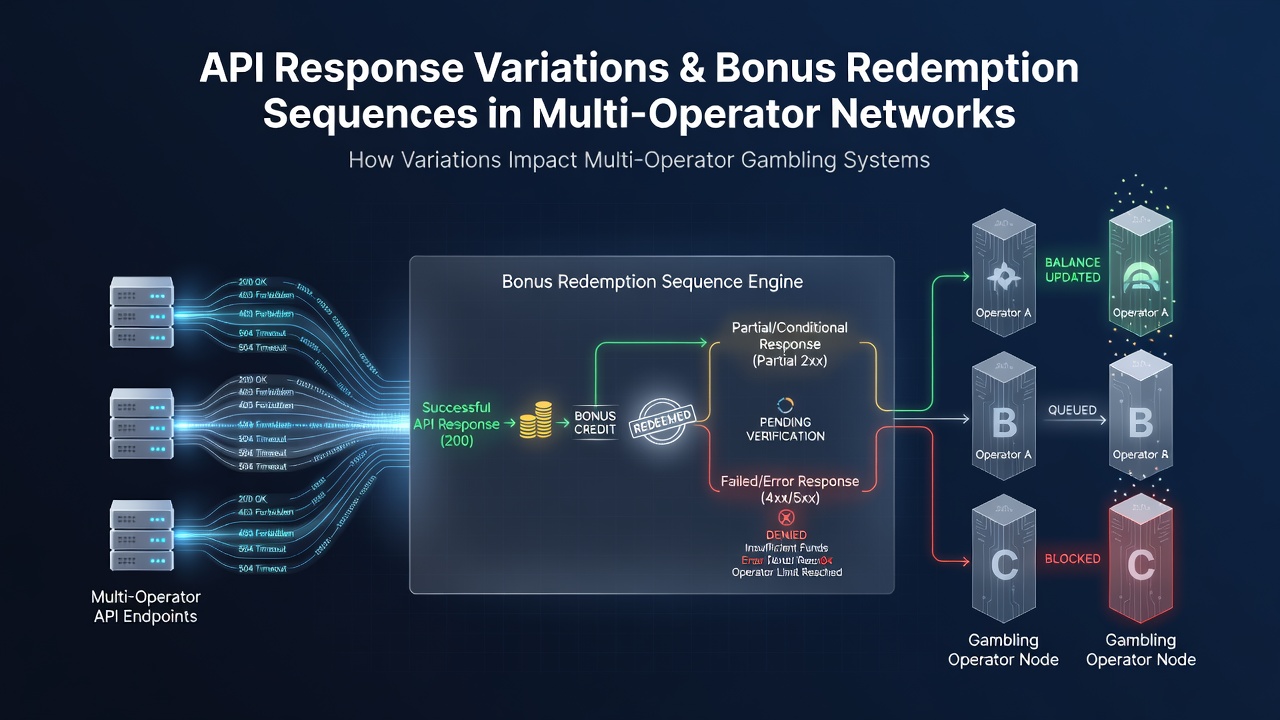
Researchers tracking these patterns have found that error code handling also changes the flow. A 429 rate-limit response from one operator triggers an immediate queue delay and rerouting to a secondary provider, while a 503 service-unavailable code from another prompts a full sequence restart after a cooldown period. The result is that players experience either seamless redemption or extended waits depending on which operator's API responds first and in what format.
Impact on Cross-Operator Redemption Sequences
Across multi-operator setups, the redemption sequence begins with a unified request that fans out to several APIs simultaneously. When responses arrive at different speeds and with inconsistent fields, the orchestration layer must decide whether to aggregate partial data, wait for all replies, or proceed with the fastest valid response. This decision point determines whether the sequence completes in a single pass or requires multiple round trips that consume additional network resources.
Studies on similar distributed systems show that inconsistent response schemas lead to higher rates of partial redemptions, where players receive credit on one operator but encounter blocks on others until manual reconciliation occurs. In June 2026, scheduled updates to common API standards are expected to reduce these schema mismatches by enforcing stricter field definitions across participating networks.
Regional and Regulatory Influences on API Behavior
Geographic differences in regulatory requirements further modify API responses and therefore redemption sequences. Operators serving markets with strict anti-money-laundering rules often embed additional verification tokens in their replies, lengthening the payload and increasing processing time. In contrast, regions with lighter oversight return minimal confirmation objects that allow faster sequence completion but limit downstream reporting capabilities.
According to data compiled by the New Jersey Division of Gaming Enforcement, cross-border networks experience measurable sequence divergence when operators must satisfy conflicting jurisdictional demands within the same API call. These variations become visible in transaction logs that record different step counts and timestamps for identical bonus offers processed through separate operators.
Technical Adjustments Operators Use to Stabilize Sequences
Network administrators implement caching layers and response normalization services to mitigate the effects of API variations. By storing standardized versions of common responses and applying transformation rules before the data reaches the orchestration engine, these services reduce the number of sequence branches that occur during redemption. Yet the approach adds its own latency, which can offset gains when the underlying APIs already deliver inconsistent timing.
Some platforms have adopted circuit-breaker patterns that temporarily isolate slow or malformed responses, allowing the sequence to continue with available data from faster operators. This method preserves overall completion rates while logging the variations for later analysis, helping teams identify which endpoints require optimization.
Conclusion
API response variations continue to shape bonus redemption sequences by introducing timing differences, schema mismatches, and conditional branching that multi-operator networks must accommodate. As platforms prepare for the June 2026 standard updates, the focus remains on consistent response handling to maintain predictable flows across all participating operators. Continued monitoring of these technical interactions provides the data needed to refine orchestration logic and reduce sequence disruptions.